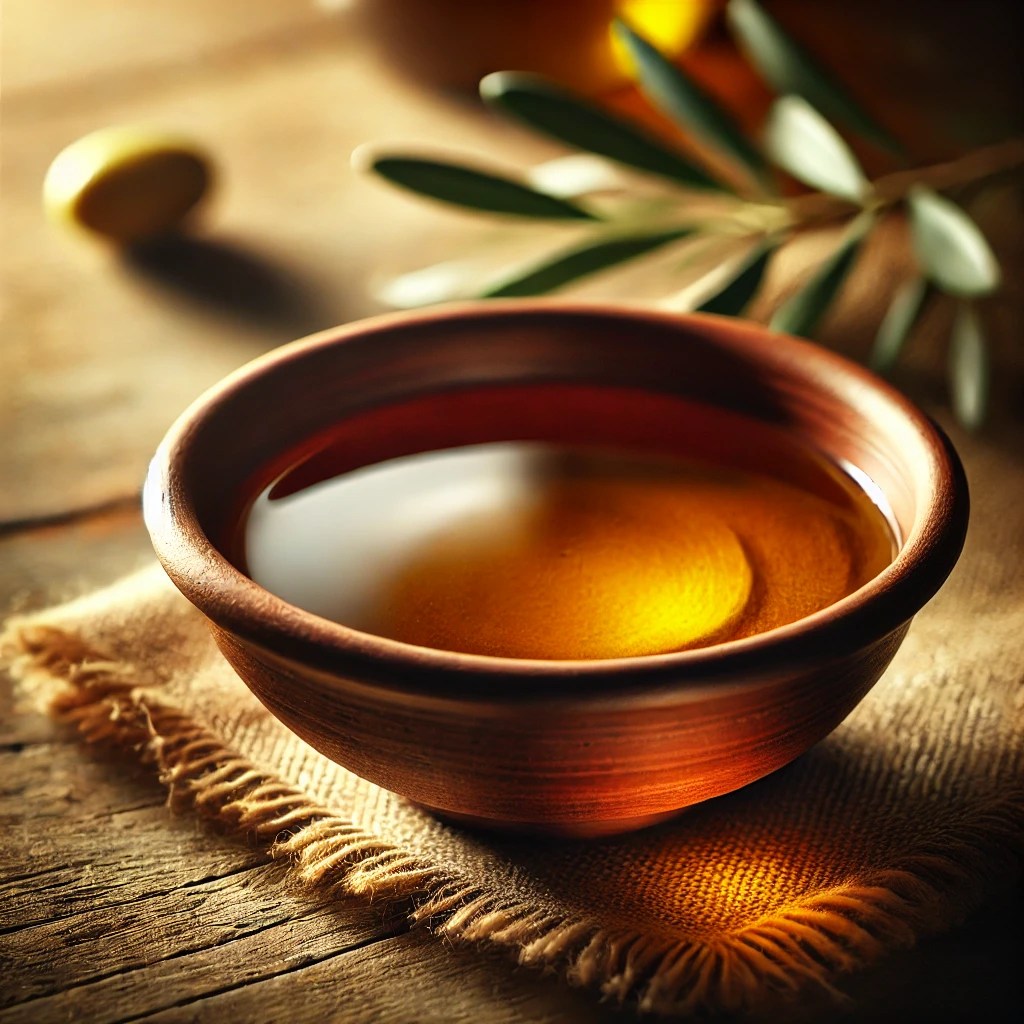
The cold extraction process involves mixing the olive paste to release fine droplets of oil, which naturally bind together.
Traditionally, this paste was created using a grindstone, similar to the first cold-pressed method. However, concerns over oxidation and the potential loss of aroma led to the adoption of centrifugation, which minimises these risks. Centrifugation is a process that uses rapid spinning (centrifugal force) to separate substances of different densities within a mixture. In the case of olive oil production, centrifugation is used to separate the oil from water and solid residues in the olive paste.
The process works by spinning the mixture at high speeds, causing heavier components (like water and solids) to move outward while the lighter oil collects in the centre, allowing for efficient extraction. This method helps preserve the oil’s quality by reducing oxidation and maintaining its natural aroma and nutrients.
In modern cold extraction, olives are ground in a mixer at approximately 27°C. The resulting paste is then processed through a centrifugal pump to separate the oil from the solid residues and water.
 ZOUBAKI EXTRA VIRGIN OLIVE OIL
Leave a comment